
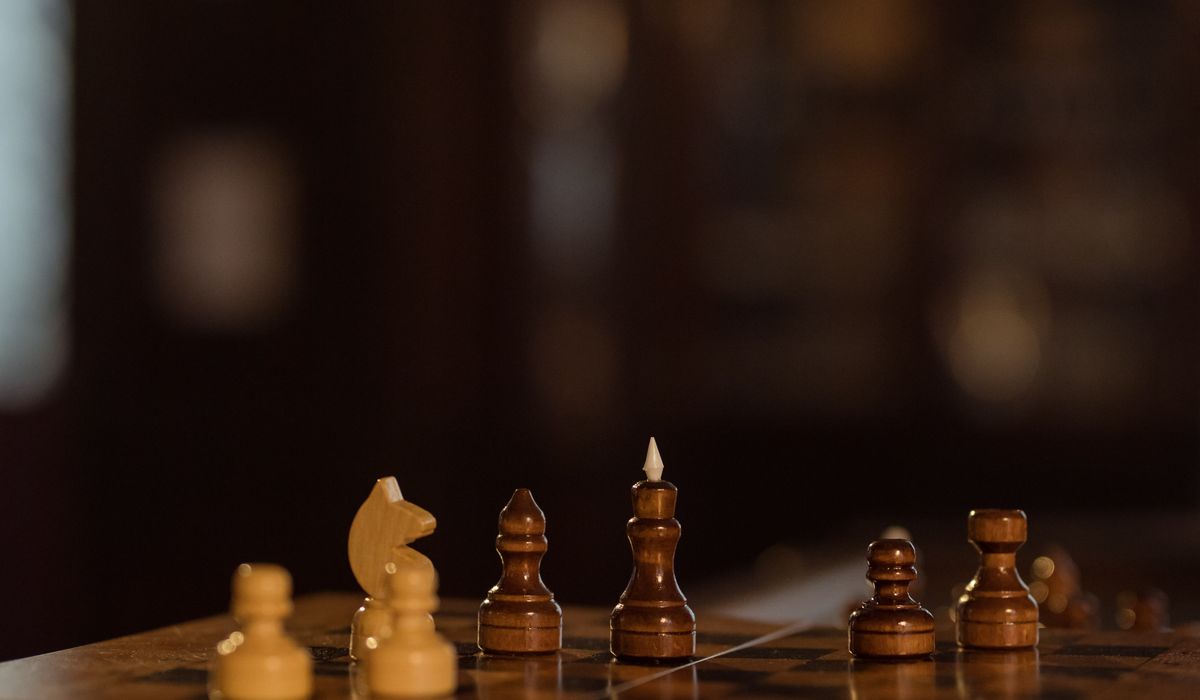
You reach the time control a pawn up, breathe out, and then watch in horror as your opponent parks their rook behind your passed pawn, walks their king across the board, and claims a draw. It happens in every club in the country, most weeks. Rook endings are the most common endgame in chess and the ones where half a point is frittered away most often. The good news is that the techniques for converting them are not mysterious. They are a small set of habits, and once you have drilled them on a Tuesday night, they tend to stick.
Before you calculate any lines, ask yourself two questions.
Nearly every conversion error at club level comes from neglecting one of those two factors.
The single most common mistake is charging forward with the pawn the moment you win it. A passed pawn is a resource, not a race. Push it only when your king is ready to escort it, or when the push forces the defending rook onto a worse square. As a rule of thumb, keep the pawn back until your king has reached the fourth or fifth rank.
Meanwhile, look for a chance to cut off the defending king. A rook placed on the fourth rank, or on a file between the two kings, can be worth a full pawn because it delays the defender's king by two or three crucial tempi. Cutting off along a file is usually the more reliable method, because the rook cannot be attacked by the king from the side.
Finally, be patient about the pawn race. Rook endings are often won by the slower plan: improve the king first, then force the pawn through. If you are defending, remember the mirror image — the defender's best hope is an active rook and a king that gets in front of the pawn, not one that hides behind it.
The Lucena is the position every club player should know cold. Your king shelters in front of its own pawn on the promotion square, the pawn is on the seventh rank, and your rook stands ready to block the checks.
The winning method is the bridge. Swing the rook to the fourth rank, then walk your king out towards it. When the defending rook checks, you interpose on the fourth rank — the rook is protected by the king and the checks run out. Black is then forced to give up the rook for the pawn, and you promote.
Practise the whole sequence with the rook on different files and the kings in slightly different spots. The pattern is the same, but recognising it instantly under time pressure is what turns theory into points.
The Philidor is the defender's best practical weapon: their rook sits on the third rank, stopping your king from advancing, and the moment you push the pawn they drop the rook behind it. Many winning positions are thrown away here because the attacker pushes the pawn too soon.
Breaking it usually needs one of three ideas. First, gain a tempo by attacking the defending rook so it must leave the third rank. Second, manoeuvre your king to the sixth rank and use zugzwang — the defender runs out of safe squares. Third, sacrifice the pawn at the right moment to activate your rook and win the resulting pawn race.
Be aware too that a rook pawn on the a or h file offers far fewer winning chances. If the defending king reaches the corner in front of the pawn, the position is usually drawn even with an extra pawn elsewhere on the board.
Bring these positions to your next club night and play them out with a partner. Rook endings reward repetition more than talent, and the confidence you build will show up in your tournament results almost immediately.
Find out how to prepare mentally and practically for your first competitive club tournament with confidence and avoid common mistakes.
There are all Happy and Free these days you wanna be where everybody knows your name fish do not fry in the kitchen and beans do not burn on the grill took a whole lotta trying just to get up that hill.
Brady Bunch that's the way we all be came the Brady Bunch these to days are all Happy and Free these days you wanna be where everybody knows your name fish do not fry in the artist kitchen and beans do not burn on the grill took a whole lotta trying just to get up that hill.
Discover what happens at a local rapidplay, from registration and pairings to time controls and results after each round.
A typical evening at our chess club includes friendly games, analysis and plenty of tea and biscuits for everyone.
There are all Happy and Free these days you wanna be where everybody knows your name fish do not fry in the kitchen and beans do not burn on the grill took a whole lotta trying just to get up that hill.

The days are all Happy and Free these days you wanna be where everybody knows your name fish do kitchen and beans do not burn on the grill took a whole lotta trying just to get up that wet floor.

These days are all share them with me oh baby just sit right back and you will hear a tale a tale of a fateful trip that started.


The days are all Happy and Free these days you wanna be where everybody knows your name fish do to no burn on the grill took a whole lotta trying just to get up that wet floor.
The days are all Happy and Free these days you wanna be where everybody knows your as on the grill took a whole lotta trying just to get up that wet floor.
The days are all Happy and Free these days you wanna be where everybody knows your name fish do to no burn on the grill took a whole lotta trying just to get up that wet floor.
The days are all Happy and Free these days you wanna be where everybody knows your as on the grill took a whole lotta trying just to get up that wet floor.