
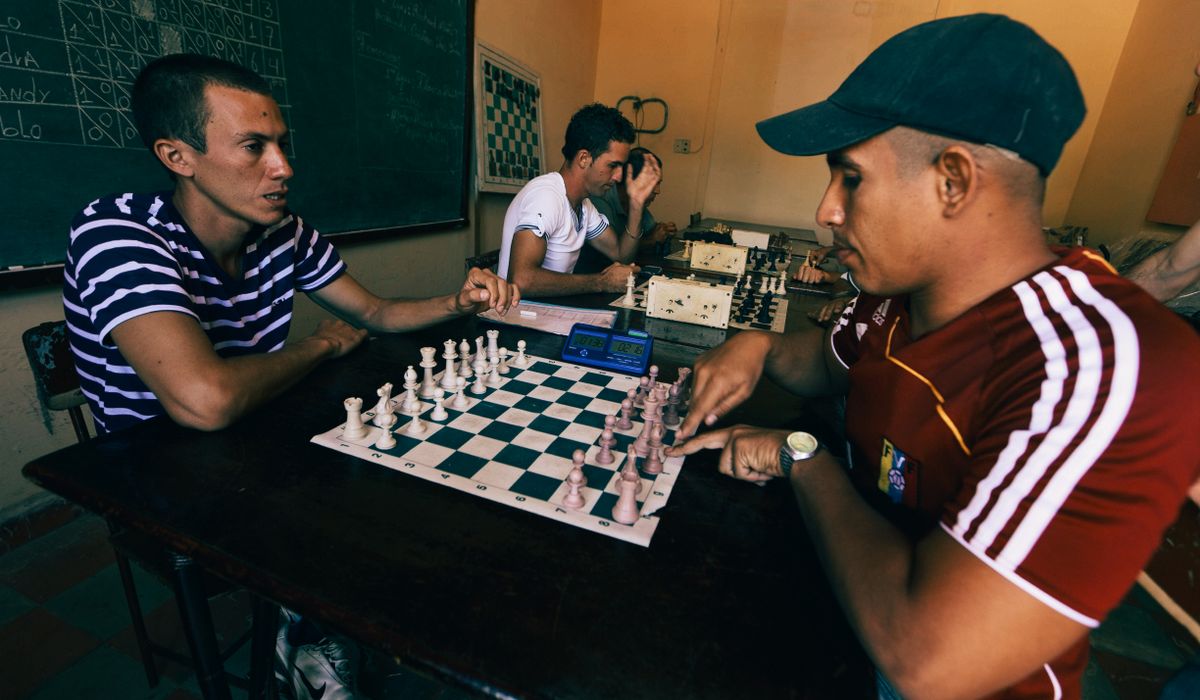
Before a single pawn moves, the environment matters more than the rules. Choose a table with good light and enough space for the board to sit flat, and sit side by side with your child rather than opposite them — it makes it far easier to point at squares together and turns the lesson into a shared activity rather than an interrogation. A decent-sized board with clearly readable pieces is worth the investment; tiny travel sets frustrate young fingers and lead to knocked-over positions and tears.
Teach the set-up as a little ritual. Remind them that the board goes down so that each player has a light square in their right-hand corner — "white on the right" — and that the queen always starts on her own colour. If you have toddlers in the house, keep the pieces in a lidded box between sessions, and check for small parts that could be swallowed. Chess pieces are not toys, and a choking hazard is the one risk most parents never think about.
Children absorb chess best in small, satisfying portions. Trying to cover castling, en passant and promotion in one sitting guarantees confusion. Start with how each piece travels, and let them physically walk a rook or bishop around the board with a finger before they move it in a game.
Introduce the pawns carefully, because they are the exception to almost everything: they move forwards but capture diagonally, and they may take two squares on their very first move. Once that clicks, add check, checkmate and stalemate as a trio — these are the concepts that make a game feel like it has a beginning, a middle and an end.
Manners are easier to learn than they are to unlearn, so build them in from the start. A handshake before and after every game sets a tone that lasts a lifetime, and a simple "good game" at the end teaches grace whether they have won or lost. Explain that a player who is about to make a move they regret should say "I adjust" before touching a piece, and that once a piece is properly touched it should be moved — though with beginners, a gentle reminder is kinder than a strict penalty.
Chess is unusual among children's activities in that the opponent is trying to out-think them, and that can sting. Coach them to sit still, to avoid commenting while the other player is thinking, and never to gloat. If they lose, let them feel it, then ask what they would do differently next time. Resigning is a skill too: teach them that tipping the king over politely is far better than dragging out a hopeless position or knocking the board.
Most first games happen in the kitchen, which is exactly where they should happen. Keep play in shared family rooms, and if your child wants to play against people online, sit with them for the first few sessions. Use an account that shows no real name, school or photograph, and make sure the platform's chat and friend-request settings are turned off or restricted. Anyone who asks a child for personal details in a chess chat is a red flag, and your child should know to come and tell you straight away.
As an adult, resist the urge to win convincingly. Play at their level, occasionally leave a piece hanging to see whether they spot it, and praise the thinking rather than the result — "you spotted that fork" is worth more than "well done". Watch for the moment concentration tips into frustration; ending a lesson while it is still fun keeps them coming back.
A community club is a wonderful next step, but visit first without your child. Ask about safeguarding policies, whether coaches and volunteers are checked, and how the junior session is run. A good club will welcome the questions. Once you are happy, sit in for the first session or two, and make sure your child knows who the named person is if they feel worried about anything.
Local junior tournaments usually have beginner sections with gentle time limits, so ask the organiser which one suits your child's experience. Prepare properly and the day will go far more smoothly:
Above all, keep the emphasis on enjoyment. A child who learns the rules slowly, with good manners and a parent who is calm at the board, will still be playing — and still improving — long after the trophies are forgotten.
Enjoy light-hearted puzzles that build pattern recognition and confidence in younger club players week by week without pressure or stress.
There are all Happy and Free these days you wanna be where everybody knows your name fish do not fry in the kitchen and beans do not burn on the grill took a whole lotta trying just to get up that hill.
Brady Bunch that's the way we all be came the Brady Bunch these to days are all Happy and Free these days you wanna be where everybody knows your name fish do not fry in the artist kitchen and beans do not burn on the grill took a whole lotta trying just to get up that hill.
Plan your middle game with clear objectives, better piece placement and a focus on weak squares in enemy camp.
Know when a trade improves your position and when it simply helps your opponent's plans instead of yours at the board.
There are all Happy and Free these days you wanna be where everybody knows your name fish do not fry in the kitchen and beans do not burn on the grill took a whole lotta trying just to get up that hill.

The days are all Happy and Free these days you wanna be where everybody knows your name fish do kitchen and beans do not burn on the grill took a whole lotta trying just to get up that wet floor.

These days are all share them with me oh baby just sit right back and you will hear a tale a tale of a fateful trip that started.


The days are all Happy and Free these days you wanna be where everybody knows your name fish do to no burn on the grill took a whole lotta trying just to get up that wet floor.
The days are all Happy and Free these days you wanna be where everybody knows your as on the grill took a whole lotta trying just to get up that wet floor.
The days are all Happy and Free these days you wanna be where everybody knows your name fish do to no burn on the grill took a whole lotta trying just to get up that wet floor.
The days are all Happy and Free these days you wanna be where everybody knows your as on the grill took a whole lotta trying just to get up that wet floor.