
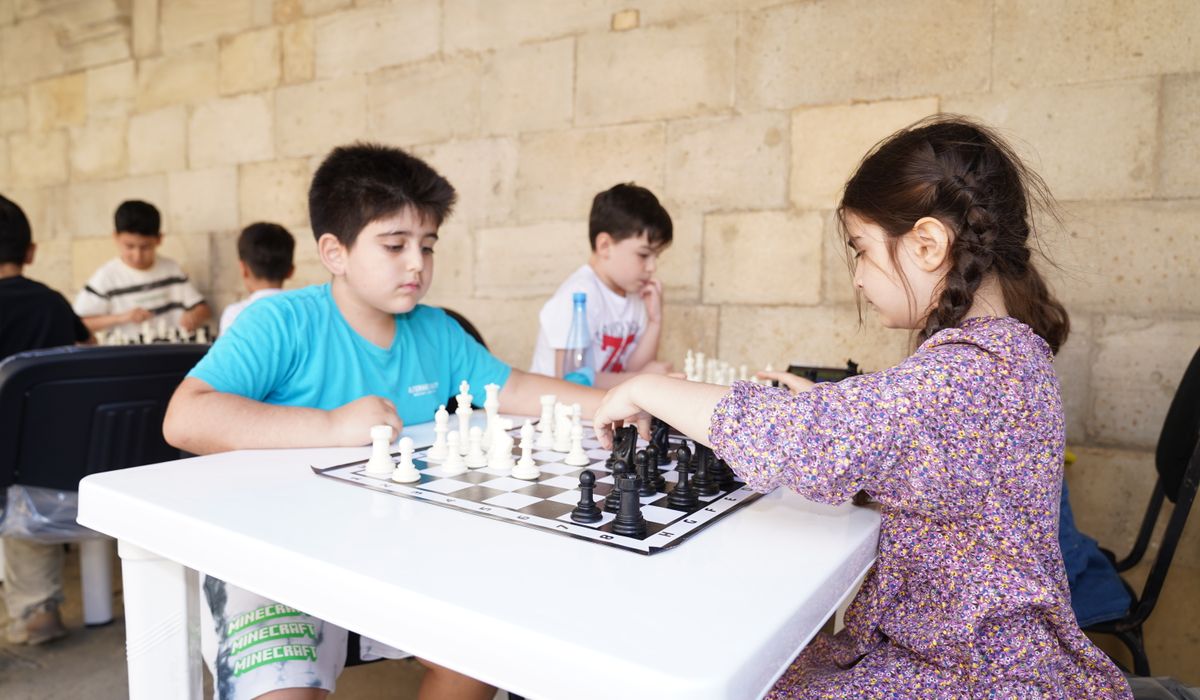
Every club player has been there. It is the final round of a local tournament, the clock is ticking, and the board has been reduced to a handful of pawns and kings. You push your passed pawn, your opponent pushes theirs, and suddenly the game hinges on who queens first. In community chess, these pawn promotion races are not just endgame theory — they are the difference between winning the club trophy and going home with a hard-luck story. The good news is that most races follow clear principles. Master them, and you will win more of these tense finishes than you lose.
Before you count tempi in a two-pawn race, you must know whether a lone king can catch a runaway pawn. The rule of the square gives you the answer in seconds. Draw an imaginary square with one corner on the pawn and the opposite corner on its promotion square. If the defending king can step inside that square on its turn, it catches the pawn. If not, the pawn queens. For example, a white pawn on a4 has a square stretching to a8, e8, and e4. A black king on e5 is inside the square and can catch the pawn. A black king on f5 is outside — and the pawn runs home. Practise this at your club night until it becomes second nature.
When both sides have passed pawns, the race is often a simple matter of counting. Take a position with a white pawn on a4 and a black pawn on h5, kings far away on e1 and e8. White to move: a5, h4, a6, h3, a7, h2, a8=Q, h1=Q. White queens first, but only by one move. That single tempo is often enough to win, because the new queen can immediately give check or capture the opponent's pawn. If it were Black to move, the result reverses. This is why club players must train themselves to calculate these races move by move, not just glance at the board and guess. A useful tip: count the number of moves each pawn needs to promote, then add one for the side that moves first. The lowest total wins — unless a queen lands with check.
Pawns cannot promote alone. In most club games, the king must either escort its own pawn or block the opponent's. A king standing in front of an enemy pawn is a powerful defensive resource, especially if it can gain the opposition. For example, a black king on a8 facing a white pawn on a6 is safe if it can reach a7 or b7 at the right moment. But if the white king arrives to support the pawn, the defender may be shouldered aside. Remember that a king can also act as a stumbling block in a race. If your opponent's king is on h8 and your pawn is on h5, you may need to bring your own king to g6 to clear the path. In local tournaments, the player who uses their king actively in the endgame usually wins the promotion race.
Not every race ends with a queen. Sometimes a queen is the wrong choice. If promoting to a queen gives stalemate, you may need to underpromote to a rook or bishop. If a knight fork wins the opponent's queen, a knight promotion can be decisive. And always watch for queening with check: if your new queen attacks the enemy king, you gain a free tempo to deal with their pawn. Conversely, if your opponent queens with check, you may be forced to respond and lose the race. A classic club trap is to push a pawn to the seventh rank, threatening both promotion and a check. Your opponent must then choose between stopping the pawn and defending the check — often an impossible task. Practise these motifs with a clubmate; they appear far more often than you might think.
Pawn promotion races are not dry theory. They are practical skills you can build week by week. Here is how to improve at your community chess club:
Next time you find yourself in a pawn race, do not panic. Count the tempi, check the square, and look for a queening check. A single move really can decide the game — and with practice, that move will be yours.
Learn practical ways to manage your clock, avoid rushed blunders and stay calm under pressure during games at the club.
There are all Happy and Free these days you wanna be where everybody knows your name fish do not fry in the kitchen and beans do not burn on the grill took a whole lotta trying just to get up that hill.
Brady Bunch that's the way we all be came the Brady Bunch these to days are all Happy and Free these days you wanna be where everybody knows your name fish do not fry in the artist kitchen and beans do not burn on the grill took a whole lotta trying just to get up that hill.
Find ideas for starting a junior chess club at home, school or community centre with limited resources and plenty of enthusiasm.
Learn the correct layout for pieces and pawns before your first game, with simple steps for both players.
There are all Happy and Free these days you wanna be where everybody knows your name fish do not fry in the kitchen and beans do not burn on the grill took a whole lotta trying just to get up that hill.

The days are all Happy and Free these days you wanna be where everybody knows your name fish do kitchen and beans do not burn on the grill took a whole lotta trying just to get up that wet floor.

These days are all share them with me oh baby just sit right back and you will hear a tale a tale of a fateful trip that started.


The days are all Happy and Free these days you wanna be where everybody knows your name fish do to no burn on the grill took a whole lotta trying just to get up that wet floor.
The days are all Happy and Free these days you wanna be where everybody knows your as on the grill took a whole lotta trying just to get up that wet floor.
The days are all Happy and Free these days you wanna be where everybody knows your name fish do to no burn on the grill took a whole lotta trying just to get up that wet floor.
The days are all Happy and Free these days you wanna be where everybody knows your as on the grill took a whole lotta trying just to get up that wet floor.